California Rainfall Winter 2026-27: Climate Markets for the Wet Season
California's water year runs October through September. The first major storms typically arrive in November. Here's how prediction markets cover LA and SF monthly rainfall, and what to actually do with that.
Kalshi · Trade $25 and Get $25!
CAPREDICTSClaim (opens in a new tab)21+ · T&Cs apply
Certain limitations apply. The offer is available to new users only, subject to the terms and conditions at kalshi.com/tc/500. 18+ only. Restrictions and eligibility requirements apply. Event contract trading involves significant risk and is not appropriate for everyone. Please carefully consider if it is appropriate for you in light of your personal financial circumstances. Kalshi products are not available in all jurisdictions. See kalshi.com/regulatory for more information.

On this page
TL;DR:
California's wet season runs from October through April, with peak rainfall typically December through March. Kalshi and Robinhood (which lists Kalshi contracts) offer monthly rainfall contracts for both Los Angeles and San Francisco. Multi-tier yes/no markets like 'rain above 2 inches in San Francisco in January' or 'rain above 1 inch in LA in April.' For California residents, these are some of the cleanest, lowest-emotion prediction markets available: purely information-driven, with monthly resolution and small position sizes. This guide walks through what's tradable, how to think about ENSO and atmospheric river forecasting, and the responsible reasons to use these markets.
Trade this on Kalshi
Kalshi lists event contracts on weather and rainfall when a market is open. New users: Trade $25 and Get $25 with code CAPREDICTS.
See Kalshi markets (opens in a new tab)
Certain limitations apply. The offer is available to new users only, subject to the terms and conditions at kalshi.com/tc/500. 18+ only. Restrictions and eligibility requirements apply. Event contract trading involves significant risk and is not appropriate for everyone. Please carefully consider if it is appropriate for you in light of your personal financial circumstances. Kalshi products are not available in all jurisdictions. See kalshi.com/regulatory for more information.
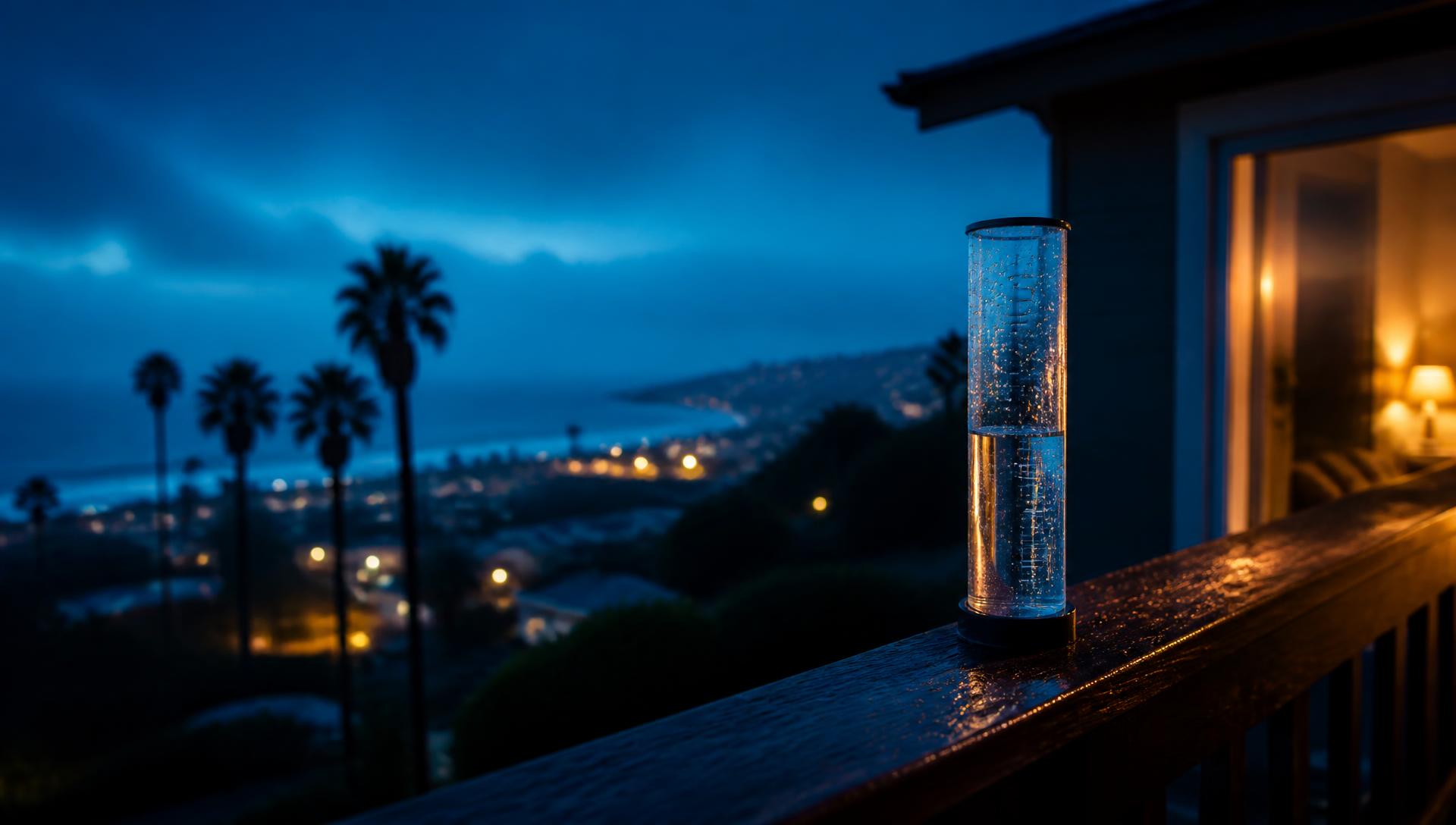
California's water year runs October 1 through September 30. The first major storms typically arrive in November, and peak rainfall hits December through March. For Californians who follow weather patterns, Kalshi (opens in a new tab)'s monthly rainfall contracts on LA and SF offer a clean, low-emotion way to take a position on the wet season.
Our Take
Our take: ENSO-neutral years (which 2026-27 is currently projected to be) have produced California rainfall outcomes within the 50-150% of normal band in 8 of the last 10 occurrences. The fat tails, extreme drought or atmospheric river years, are where the market overpays for downside protection.
Kalshi · Trade $25 and Get $25!
CAPREDICTS
Claim on Kalshi (opens in a new tab)
Certain limitations apply. The offer is available to new users only, subject to the terms and conditions at kalshi.com/tc/500. 18+ only. Restrictions and eligibility requirements apply. Event contract trading involves significant risk and is not appropriate for everyone. Please carefully consider if it is appropriate for you in light of your personal financial circumstances. Kalshi products are not available in all jurisdictions. See kalshi.com/regulatory for more information.
Last checked October 27, 2026
The contracts
Kalshi and Robinhood offer binary prediction contracts on monthly rainfall thresholds for designated weather stations in Los Angeles and San Francisco.
Kalshi lists monthly rainfall contracts year-round for both Los Angeles (Downtown LA, USC station) and San Francisco (Mission Dolores). Each month carries multiple yes/no thresholds. "rain above 1 inch in San Francisco in January," "rain above 2 inches in LA in February." Robinhood's prediction markets section lists the same Kalshi contracts.
Resolution comes from official NOAA (opens in a new tab) monthly precipitation totals, published shortly after month-end. Binary, unambiguous, friction-free.
What drives rainfall pricing
Rainfall pricing is primarily driven by the El Nino-Southern Oscillation state, which causes drier winters during La Nina events and wetter conditions during El Nino periods.
ENSO state is the dominant macro variable. La Niña winters typically produce drier winters in Southern California and more variable patterns in the north. El Niño winters typically bring wetter SoCal winters. Neutral years produce closer-to-normal patterns.
On a shorter horizon, the National Weather Service and Climate Prediction Center publish 6-10 day and 8-14 day outlooks that move contract pricing meaningfully. Atmospheric river tracking, most useful for SF and Northern California, produces the largest single-month price swings as forecasts firm up.
How to think about edge
Edge in rainfall contracts involves utilizing National Weather Service discussions and atmospheric indices to anticipate storm upgrades before consensus pricing reacts to new data.
For most retail traders, edge in rainfall contracts comes from being faster than consensus around incoming storms. A weekend storm forecast that gets upgraded Monday morning will reprice "above 2 inches" contracts within hours. If you watch NWS discussions and atmospheric-river indices, you can sometimes anticipate those moves.
Climate professionals (hydrologists, water managers, forecast meteorologists) have meaningful structural edge here. Casual traders compete on attention and reaction speed.
Rainfall contracts are the cleanest, lowest-emotion prediction markets available to Californians.
Hedging drought-related expenses
Ready to trade?
Kalshi: US-regulated (CFTC) exchange with a wide range of markets.
Sign up at Kalshi (opens in a new tab)Certain limitations apply. The offer is available to new users only, subject to the terms and conditions at kalshi.com/tc/500. 18+ only. Restrictions and eligibility requirements apply. Event contract trading involves significant risk and is not appropriate for everyone. Please carefully consider if it is appropriate for you in light of your personal financial circumstances. Kalshi products are not available in all jurisdictions. See kalshi.com/regulatory for more information.
Homeowners can hedge drought expenses by purchasing low-rainfall contracts that pay out based on moisture thresholds rather than individual utility costs.
Loosely possible. A homeowner facing higher water bills in dry months can buy "low rainfall" contracts as a small hedge against utility costs. But rainfall markets are not insurance. They pay on threshold resolution, not on your individual costs. The math rarely works out cleanly enough to be a real hedge.
How to trade this
Trade CA Winter Rainfall Markets in 3 Steps
- Open your account with Kalshi using our exclusive sign-up offer. This prediction market platform offers binary contracts on monthly rainfall for LA and SF.
- Allocate a small, responsible amount like $15-$30 for initial trades. This allows you to explore the market dynamics without significant financial risk.
- Focus on the Winter 2026-2027 LA and SF monthly rainfall markets. Read each contract's resolution rules carefully and consider using limit orders to enter positions at your desired price.
How rainfall compares to sports markets
Rainfall markets exhibit lower daily volatility and slower trading cycles than sports betting while eliminating emotional bias through weather-based outcomes rather than team loyalty.
Different risk profile. Lower in-week volatility. A single storm can move pricing 20-30 points, but slow rolling weather doesn't produce daily swings the way NBA games do. Monthly resolution means slower trading cycles. No rooting interest, which removes a major source of emotional bias.
The downside: less liquidity than NBA or NFL. Wider spreads, especially on supplementary thresholds (above 4 inches, above 5 inches). Size positions accordingly.
The water-year context
California's water year 2025-26 began with mixed regional conditions, leaving the state reliant on NOAA's October seasonal outlooks to project trends for the 2026-27 wet season.
Through the early months of water year 2025-26, California's snowpack and reservoir levels were running mixed, adequate in the north, below average in the south. Winter 2026-27 will start under uncertain conditions. NOAA's seasonal outlooks (issued in October) will be the key reference point heading into the wet season.
Get started
Kalshi users should open an account, monitor seasonal outlooks from NOAA's Climate Prediction Center monthly, and track ENSO state and atmospheric-river forecasts regularly.
- Open a Kalshi account.
- Bookmark NOAA's Climate Prediction Center seasonal outlooks. Read them monthly.
- Track ENSO state and atmospheric-river forecasts before each major storm.
- Start small. The cleanest prediction-market edge in this category compounds slowly.
For the wildfire-side perspective on California climate trading, see our wildfire season guide.
Sources
- NOAA Climate Prediction Center, U.S. seasonal outlook (opens in a new tab)
- California Department of Water Resources, current conditions (opens in a new tab)
- NWS: California precipitation data (opens in a new tab)
About the author
Catie Di Stefano
Catie Di Stefano has spent 15 years in the regulated gambling industry, starting at Betsson Group in Malta and spending nearly five years at Gaming Innovation Group (GiG) before building an independent consultancy across European and US iGaming brands, including a licensed engagement with Hard Rock Hotel & Casino Atlantic City under a New Jersey DGE vendor license. She's been interviewed by the California Business Journal on the rise of online gambling in the US, and spoke on a 2022 Next.io panel specifically about California's gaming market. She went on to build the OnlineGamblers.com brand and hold marketing director roles at Smartico.ai and Vegas Kings, and has been named to multiple iGamingExpress industry rankings. She now covers regulated prediction markets full-time.
Editorial standards: How we research and rank
Weekly digest
The weekly California markets email is launching soon. Until then, see this week's biggest moves.
Sources & further reading
Every figure and legal claim on this page traces back to a primary source. These are the ones we checked, open them and verify us.
- NOAA National Weather Service (opens in a new tab)
Official temperature and precipitation observations used for weather contracts.
- CAL FIRE incident reports (opens in a new tab)
Official California wildfire acreage and containment data.
- California Department of Water Resources (opens in a new tab)
Snowpack, reservoir, and rainfall data behind California water markets.
- CFTC: Commodity Futures Trading Commission (opens in a new tab)
The federal regulator that authorizes and supervises every event-contract exchange we cover.
Next steps
Ready to get started?
Kalshi
US-regulated (CFTC) exchange with a wide range of markets.
Sign up at Kalshi (opens in a new tab)Certain limitations apply. The offer is available to new users only, subject to the terms and conditions at kalshi.com/tc/500. 18+ only. Restrictions and eligibility requirements apply. Event contract trading involves significant risk and is not appropriate for everyone. Please carefully consider if it is appropriate for you in light of your personal financial circumstances. Kalshi products are not available in all jurisdictions. See kalshi.com/regulatory for more information.
Frequently asked questions
What rainfall contracts are available for California?
Kalshi lists monthly LA and SF rainfall contracts year-round, with multiple thresholds per month (e.g. above 1 inch, above 2 inches, above 3 inches). Robinhood's prediction markets section also lists these contracts via Kalshi.
When is California's wet season?
California's water year runs October 1 through September 30, with most precipitation falling November through April. Peak months are typically December through March, with January historically the wettest in many parts of the state.
How do rainfall contracts resolve?
Each contract resolves based on official monthly precipitation totals at the designated weather station, typically Downtown LA (USC) or San Francisco Mission Dolores. Totals are published by NOAA shortly after month-end.
What information moves rainfall market prices?
ENSO state (El Niño vs La Niña), Climate Prediction Center 30-day outlooks, individual storm forecasts from the National Weather Service and NOAA, and atmospheric river tracking. Prices update through the month as storms hit or fail to materialize.
Can I use this to hedge drought-related expenses?
Loosely, yes. A homeowner facing higher water bills in dry months can buy 'low rainfall' contracts as a small hedge. But rainfall markets are not insurance. They pay on rainfall thresholds, not on your individual costs. Treat any climate hedge as supplemental.
Are these markets safer than sports?
Different risk. Lower in-week volatility, monthly resolution, no rooting interest. The downside is less liquidity than NBA or NFL, which means wider spreads. Size positions appropriately.
Can I trade snowpack instead of rainfall?
Snowpack contracts are listed less consistently than rainfall. Coverage varies year to year. Check current Kalshi listings for the specific water-year contracts available.
How does this compare to commodity markets like water futures?
CME water futures (NQH2O) are an institutional product with higher minimums and complexity. Kalshi rainfall contracts are the retail-accessible expression: simpler binary structure, smaller account minimums, and direct event resolution.
What is the most reliable platform for California weather contracts?
Kalshi is the primary regulated platform for trading weather-related event contracts in the United States. It offers specific markets based on National Weather Service data, including rainfall totals in major California cities. Because it is CFTC-regulated, it provides a transparent and legal environment for residents to trade these climate outcomes compared to unregulated offshore platforms.
Is there a minimum deposit to start trading rainfall futures?
Most platforms, including Kalshi and OG, do not require a high minimum deposit to start, often allowing transfers as low as $20. This makes it feasible for residents to hedge small-scale weather risks. However, traders should consider that bank transfer times and platform fees may impact the efficiency of small deposits when participating in winter rainfall markets.
Already have Kalshi? Add a second app
- OG: Trade $25 Get $50 in Rewards! (New users only) (code
CAPREDICTS) · 42 states + D.C. Claim on OG (opens in a new tab)
Paid partnership with OG. Terms and conditions apply. Trading derivatives involves risk and may not be appropriate for all. Availability subject to jurisdictional limitations. For more information, visit: OG.com. - ProphetX: Trade $50, Earn $75! (code
CAPREDICTS) · 49 states + D.C. Claim on ProphetX (opens in a new tab)
New users only. T&Cs apply. ProphetX's minimum age is 18 (or the local age of majority if higher); we recommend 21+. Not available in Nevada. Trading involves risk.
21+ · T&Cs apply · Terms
Certain limitations apply. The offer is available to new users only, subject to the terms and conditions at kalshi.com/tc/500. 18+ only. Restrictions and eligibility requirements apply. Event contract trading involves significant risk and is not appropriate for everyone. Please carefully consider if it is appropriate for you in light of your personal financial circumstances. Kalshi products are not available in all jurisdictions. See kalshi.com/regulatory for more information.


